
Quinta do Mocho is a social neighborhood in Lisbon. There you can find many differents nationalities. The most part of immigrants come from Africa. When you go to Quinta do Mocho by bus, you go down of the bus and can not see it. It’s quite hidden what make us thing if the rest of society, the rich natives of Lisboa doesn’t want to see that neighborhood or if the residents in Quinta do Mocho doesn’t want to bee seen.
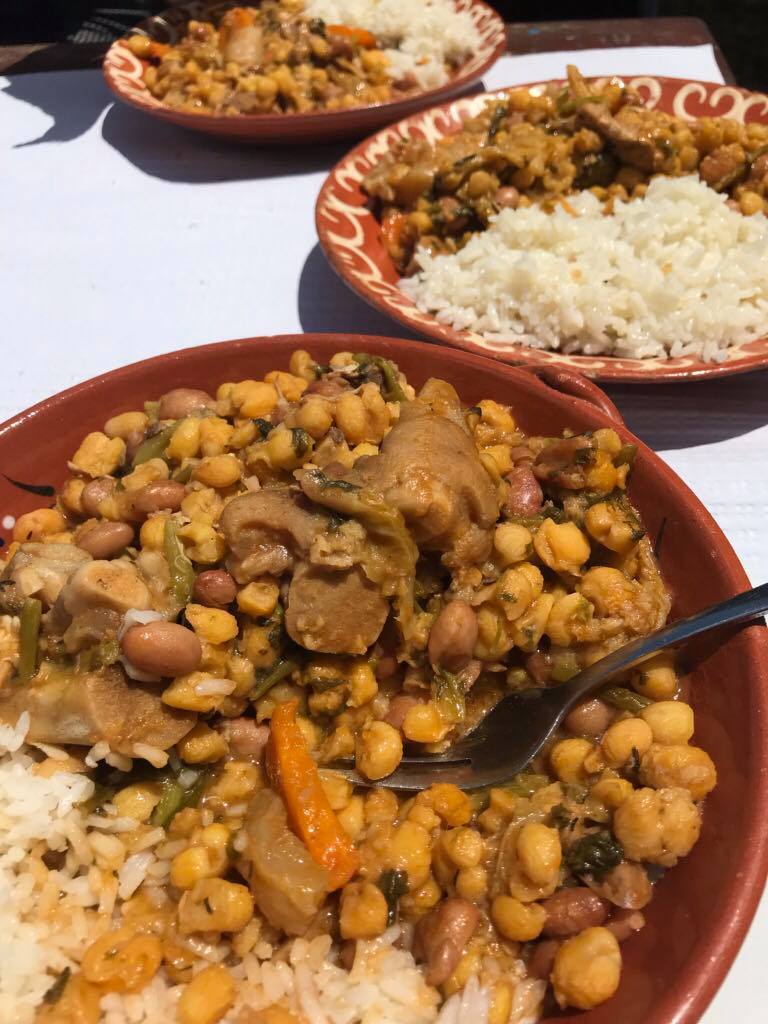
We were received there by a resident named Carlos, nickname Cali. He took us first to a great restaurant, famous in the region and we could eat typical food of Africa there: Cachupa. It is beans with chicken and pork. After we have lunch, we started walking around the neighborhood with Cali so he could explain more about it. I asked myself with I went there alone, by myself I would be so well received too.
Carlos explain that some time ago it was very violent and dangerous and that the residents rob each other instead of going out to rob. He even showed us that the windows have some metal protection which was used to help people to climb and go inside other people apartment to steal. He said they learn from it and create their own rules so now they can live in peace and also tech the kids how to behave in society. He also said that the residents take care to all children, rather than their own. e could see it’s true because Carlos was with his soon Rodrigo that stopped in a playground to play and a woman that was there with her kids said it was ok, and she could look for Rodrigo.
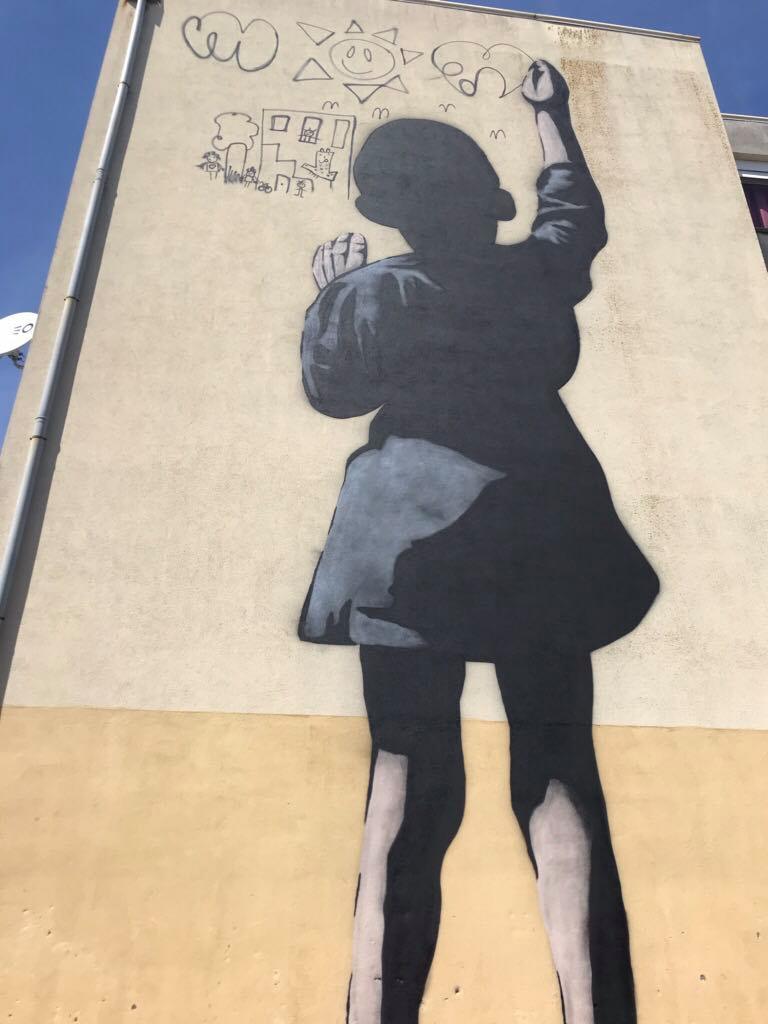
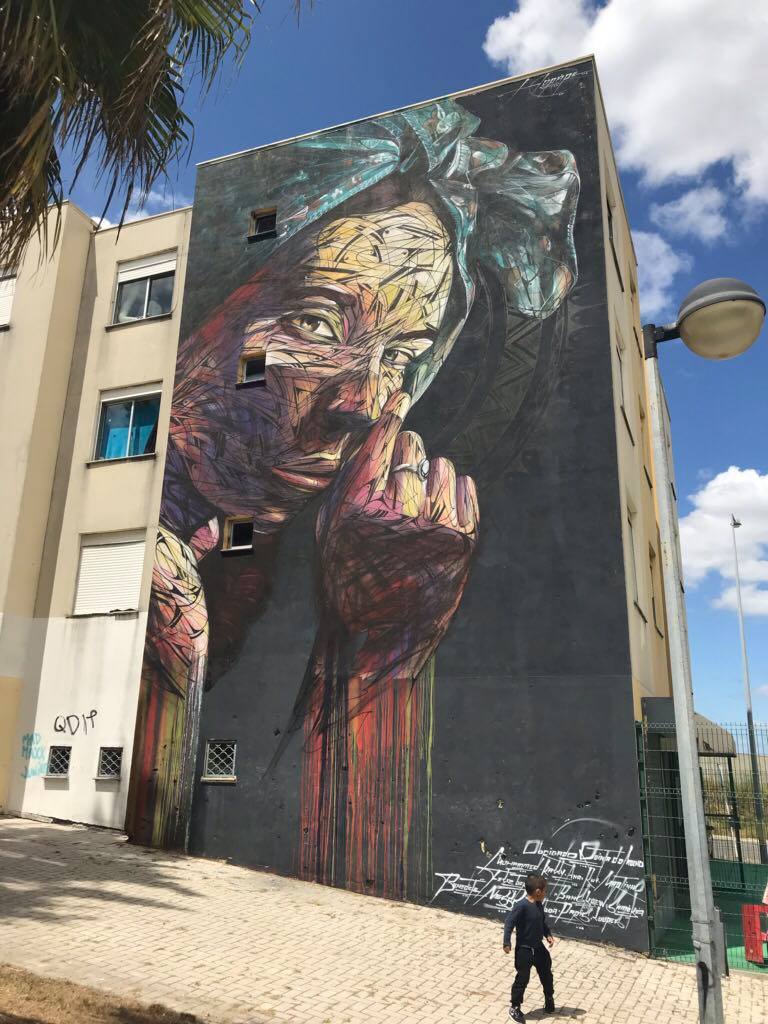
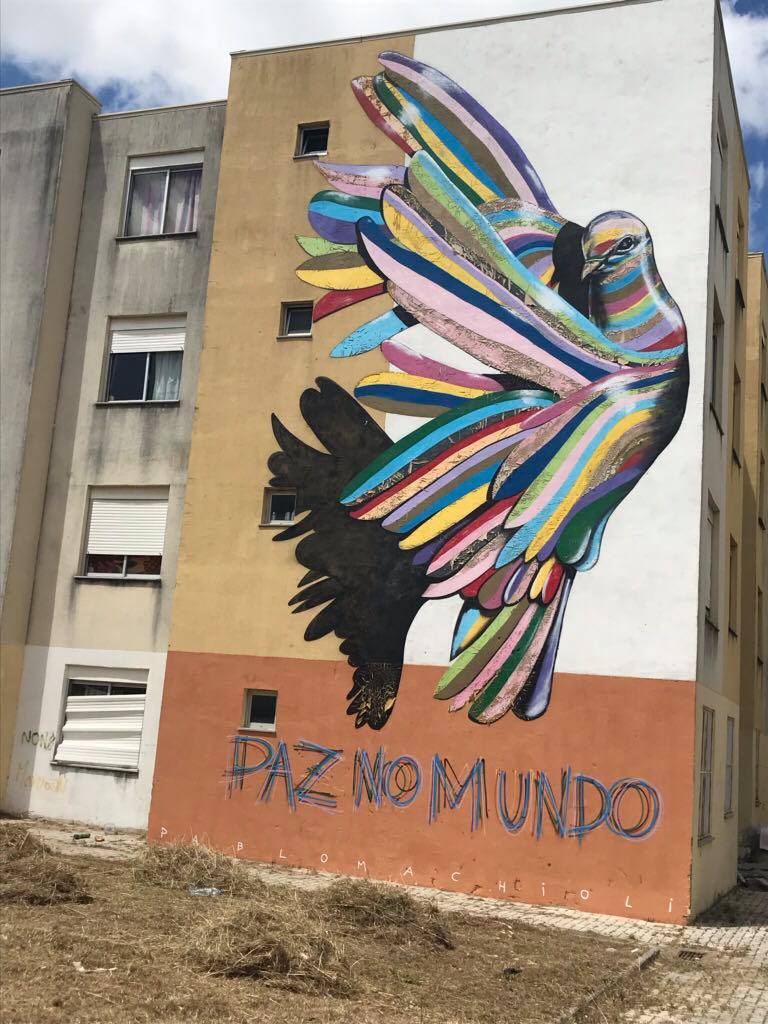
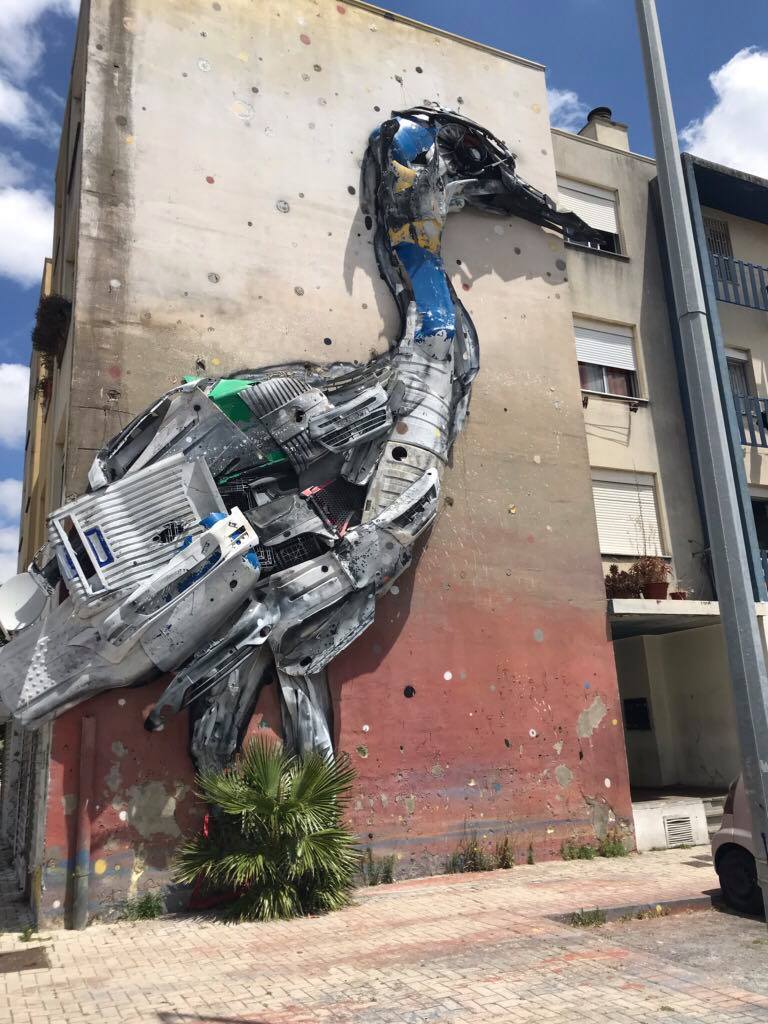
In 2014 Quinta do Mocho received some graffiti artists who started a project there. They painted some walls of the building with graffitis that are not only paints but they all have a meaning and a criticism to do related with Quinta do Mocho, immigrants, society, etc. Some artists called other and today they have more than 100 wall painted with beautiful graffitis. Carlos instead of explain the meaning of which one of them, he was always asking to see what we think about it and saying that we should use our creativity to answer thinking outside the box.
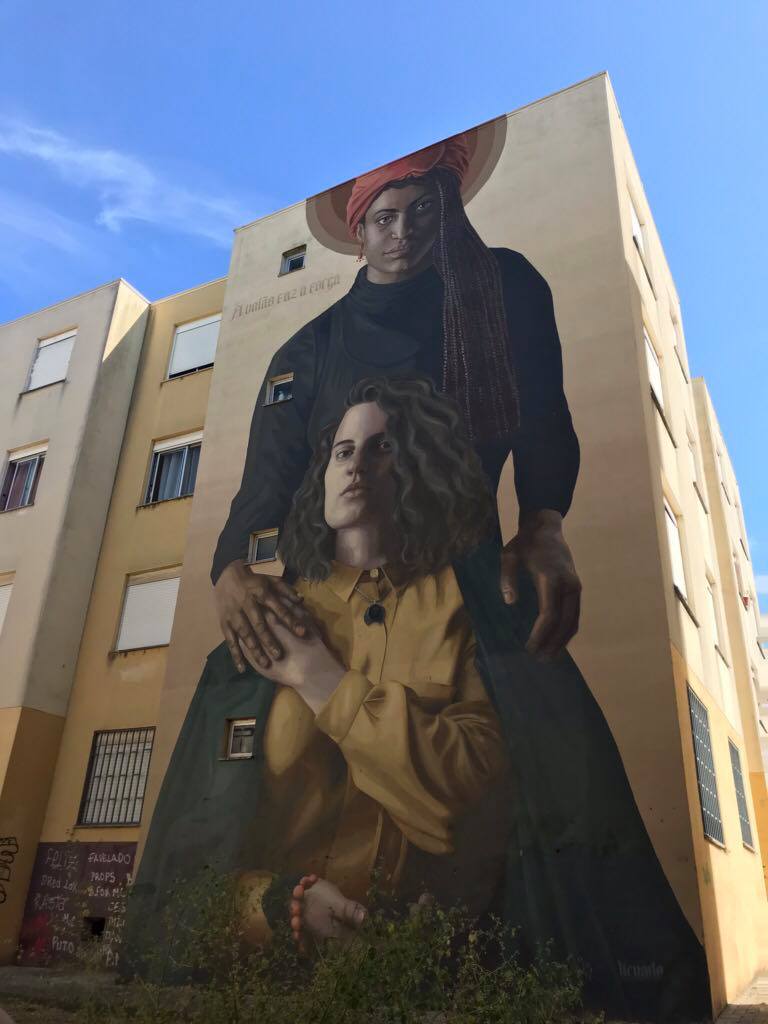
The last one we saw was a transexual african boy giving her hand to a white female with the says “unity is strength”. It was very impactating for us that study Cultural Diversity.
And in the end I could talk with Carlos about racism and compare it with my country and he also told me that now that Quinta do mocho is famous for the arts and a lot of tourist go there to see it, we can think if they are really going for the paint or if they want to see how the residents live there, something that is similar in the favela da rocinha. We concluded that we live now a days in a very globalized world, so cultures have to interact instead of disputing which breed it’s better or what some breed shoud or should’nt do, but sometimes tourism is gentrifier and respect is something that we can not lose.